Mon–Fri: 6 AM–9 PM, Sat–Sun: 7 AM–9 PM(562) 358-3037
First Choice South Whittier ConcreteFirst Choice South Whittier Concrete

Concrete retaining walls in South Whittier CA - a wall that holds your slope and drains

Soil slumping onto your patio or a slope crowding the yard? We build poured concrete walls that hold the ground back and let water out.

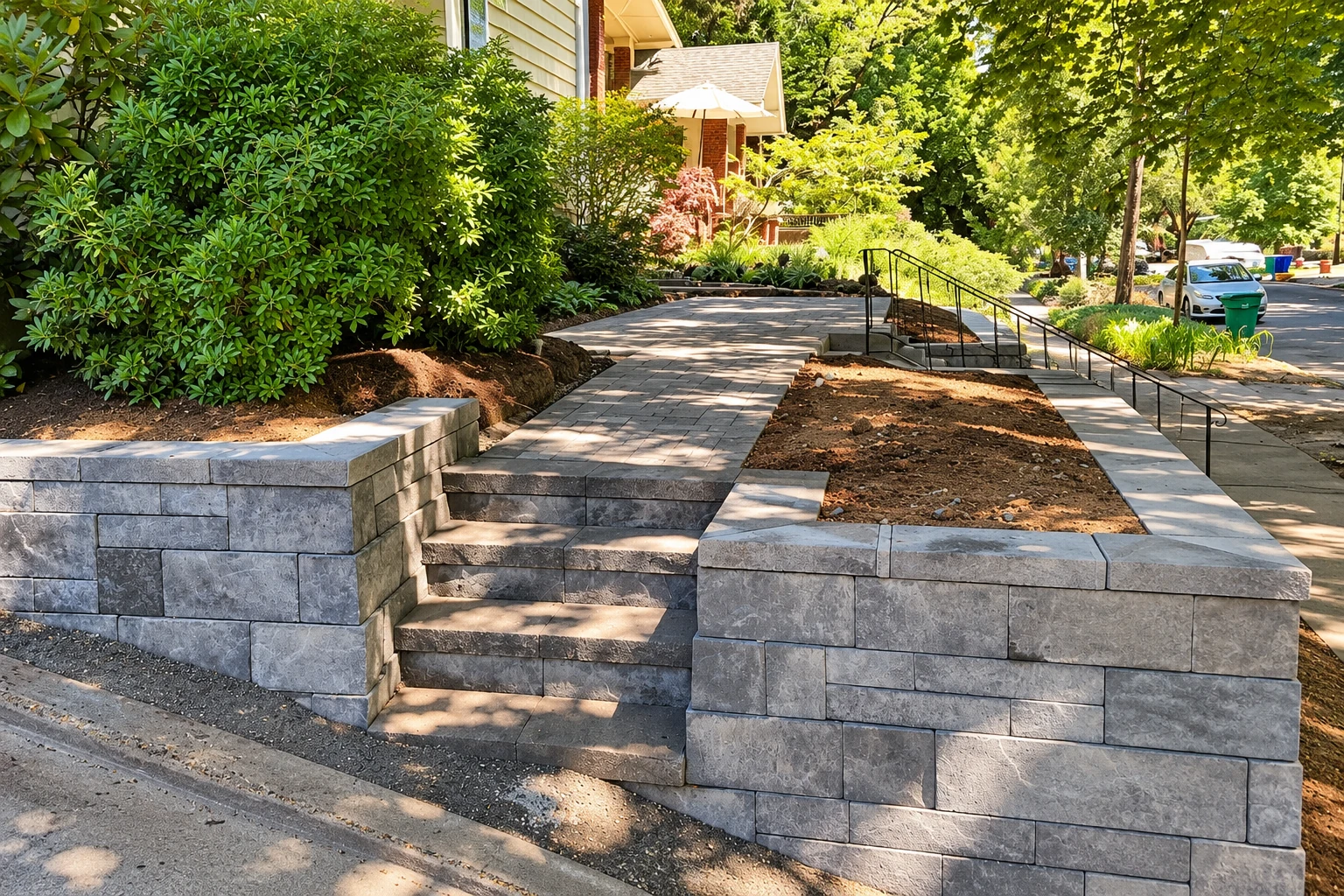
Gray block retaining walls with broad steps support raised planting beds along a paved garden walkway.

What goes into a concrete retaining wall in South Whittier?

We build concrete retaining walls in South Whittier, CA. These are poured walls that stand on their own from the footing up and hold back a slope without layers of reinforced soil behind them, so you end up with level ground and dirt that stays put.

Most people call when the ground is winning. Dirt washes onto the patio every time it rains, an old wall has started to lean, or half the backyard falls away so you can't use it. Before I talk about any wall, I want to see where your water goes and what the ground is like along the wall line, because those two things decide whether a wall stands straight or starts to tip.

The price moves mostly with the size and type of wall, how much digging and hauling it takes, and how the face is finished. The schedule usually turns on whether your job needs a permit and how long that takes, and on giving the concrete time to gain strength before we put dirt back behind it. Your estimate lays out the options I'd consider for your slope and what each one means for cost and upkeep.

What happens after you call about a retaining wall?

You'll deal with me from the first visit and with our own crew once the work starts. Here's how it goes.

I look at your slope myself

I come out to your property, look at the slope and where the water runs, and talk through what you want the yard to do. I started this business in 2013, after years of patching walks, steps and slabs at rentals, so I've seen what a rushed job costs an owner later.

You see the options before the price

I walk you through the wall types that fit your yard and what each one means for cost and upkeep, then write it all up so you can compare it with other bids. I'd rather explain something twice than leave you guessing what you're paying for.

Our own crew builds it

We're licensed and insured. Our own crew does the work, I check in along the way, and we walk the finished wall together. The state's contractor license board counts poured walls as concrete work and block walls as masonry, so it's fair to ask any bidder which kind of license covers the wall they're offering.

How we plan and build a concrete retaining wall

We start by going over the wall types with you, because the type sets a lot of the price and how much of your yard the wall takes up. Then we settle how the wall will drain before anyone starts digging, since water trapped behind a wall pushes on it every time it rains. We look hard at the ground too, because Washington State's highway design guidance puts cantilever and gravity walls at the bottom of the wall types it compares for handling settling, so the footing has to sit on soil that stays put. If the budget gets tight, I'll tell you to spend it on the footing and the drainage before a stamped or colored face, because nobody sees the footing on day one but it's what keeps the wall standing.

A new wall often makes room for other work. If it's leveling ground for a shop, a shed or a room addition, we can handle the concrete floor installation as well, and if it holds back the slope beside a pool, we can pour the concrete pool deck so the wall and the deck are planned together.

  • Wall type chosen with you before any digging starts
  • A drainage plan settled before the first shovel goes in
  • Footing dug out to firm ground and sized for the wall's height
  • Old wall broken out and hauled off when one has to go
  • Gravel backfill placed after the wall gains strength, and the site cleaned up

How the wall goes in, start to finish

Once the type and the drainage are settled, the build goes in this order, and each step is there for a reason.

  1. Dig and pack the footing

    We dig out and pack the ground where the footing goes, because a wall sitting on loose fill settles right along with it. Washington's highway guidance puts the base of these walls at roughly half the wall's height, so a taller wall takes up more of your yard at its foot than most people expect.

  2. Set the steel, drainage and forms

    We set rebar, the steel bars that help the concrete stand up to the push of the soil, wherever the design calls for it, along with the drainage the plan calls for. Then the forms go up to hold the concrete in shape for the pour.

  3. Pour and let it cure

    We pour in the cooler part of the day, because concrete that dries too fast in midday heat comes out weaker. Then we give it time to cure, the stretch when concrete slowly gains its strength, before anything leans on it.

  4. Backfill and clean up

    We bring in gravel backfill behind the wall only once it has gained enough strength to hold the load. Then we haul off the extra dirt and the forms and leave the yard ready to use.

Get a free on-site estimate for your retaining wall

Call (562) 358-3037 or send the form and tell us a little about the slope you're dealing with. We reply within one business day, and then I come out, look at the site and write up a free estimate. There's no obligation to hire us.

(562) 358-3037

Questions about concrete retaining walls in South Whittier

Which type of concrete retaining wall is best for a sloped yard in South Whittier?

It usually comes down to whether you'd rather pay for more concrete or for more design work. A gravity wall is a solid, heavy wall that's generally economical up to about 10 feet tall and usually needs no steel. A cantilever wall is a thinner wall on a wide footing that uses much less concrete but needs more design and careful building. Once I've seen your slope, I'll tell you which one I'd pick and why.

How much does a concrete retaining wall cost in South Whittier?

In Los Angeles, a 3-foot-high poured concrete retaining wall usually costs about $50 to $54 per square foot, and that covers site prep, digging, gravel backfill and reinforcement. Walls taller than 3 feet, curved walls, stamped or multi-colored concrete, tearing out an old wall and yards with difficult soil all push it higher. Your estimate shows what your own wall would take.

How does a concrete retaining wall drain water?

A wall should drain through a main drainage method built into its design. Weep holes are small openings low in the wall that let water out, but they give only backup relief and can clog, so ask any contractor what main drainage method their design uses. I'll walk you through how yours would drain when I come out.

Permits and retaining walls in South Whittier

Where you apply depends on your address. If your property is in unincorporated LA County, LA County Public Works issues the permits, and its South Whittier office processes building permits to construct structures like a wall. If your address falls outside the county's jurisdiction, another office may handle it. The county also has a separate category for projects that change the land, like moving soil or creating slopes. When a job calls for a permit, we help you find which office handles your address, help with the paperwork and plan the work around the inspections.

We're based in South Whittier and build walls across the cities around it, including Whittier, Norwalk, Downey and Santa Fe Springs. Most of the calls we get are for backyards that climb toward the back fence, side yards where the neighbor's lot sits higher and old walls that have started to lean. If you don't see your city on the site, call and ask.

Send us a few photos of your slope

Call (562) 358-3037 or use the form to tell us where the wall would go and roughly how high and long it needs to be, and add photos of the slope so I show up already thinking about which wall and drainage fit your yard.

If you're torn between wall types or just want to know what your slope needs, give me a call and I'll talk it through with you.

Tell us about your project
(562) 358-3037Get an estimate