I come out and measure the cut myself
I started this business in 2013, after years of patching slabs, walks and steps for a property management company. I'll look at where the cut goes, what's on both sides of it and how we'll get a saw to it.
Need a slab opened for a drain or a wall cut for a doorway? We make the cut and explain what the price covers.
Concrete cutting in South Whittier means sawing straight lines through a slab, cutting openings in a wall or coring round holes through concrete, so there's room for a new pipe, drain, conduit or doorway.
Most calls start with something new going in. That might be a drain line under the garage slab, conduit out to the backyard, a doorway through a wall, or a broken stretch of driveway that has to come out and leave a straight edge behind. The cut itself is usually the simple part. Everything around it takes more thought, which is why I'd rather look at the spot with you than quote it over the phone.
The price turns on how thick the concrete is, whether there's steel in it, whether it's a slab or a wall, how easy the spot is to reach, and whether you want the pieces hauled away or left in place. The schedule mostly waits on the prep, meaning getting any lines in or under the concrete found and shut off, a scan when one's needed, and a permit if the work calls for one. Once I've looked at it, the written estimate lays out each of those for your job, so you know what you're paying for before anyone starts a saw.
Here's how it goes, from the first call to the walk-through at the end.
I started this business in 2013, after years of patching slabs, walks and steps for a property management company. I'll look at where the cut goes, what's on both sides of it and how we'll get a saw to it.
I walk you through your options and what each one means for cost and upkeep, then write it all up. Hauling, a scan and any permit help show up as their own items, so you can see what each part adds.
The people running the saw work for us, not a subcontractor you've never met. I check in while the work is going, and we walk the finished job together before we call it done.
Before I price a cut, I ask whether you want the pieces hauled off or left where they are, because sawing concrete and getting rid of it are two different jobs. Then we talk about scanning, since radar can find rebar, the steel bars that strengthen a slab, along with post-tension cables, pipes and conduit hidden inside, and hitting one of those can cost far more than the scan. Where the cut sits and how thick the concrete is decide the saw. Flat saws run along slabs, wall saws work on walls, hand saws reach tight corners, and wire saws handle very thick or heavily reinforced concrete. Once the lines are marked and you've agreed to them, we cut, break and haul if that's the job, and clean up.
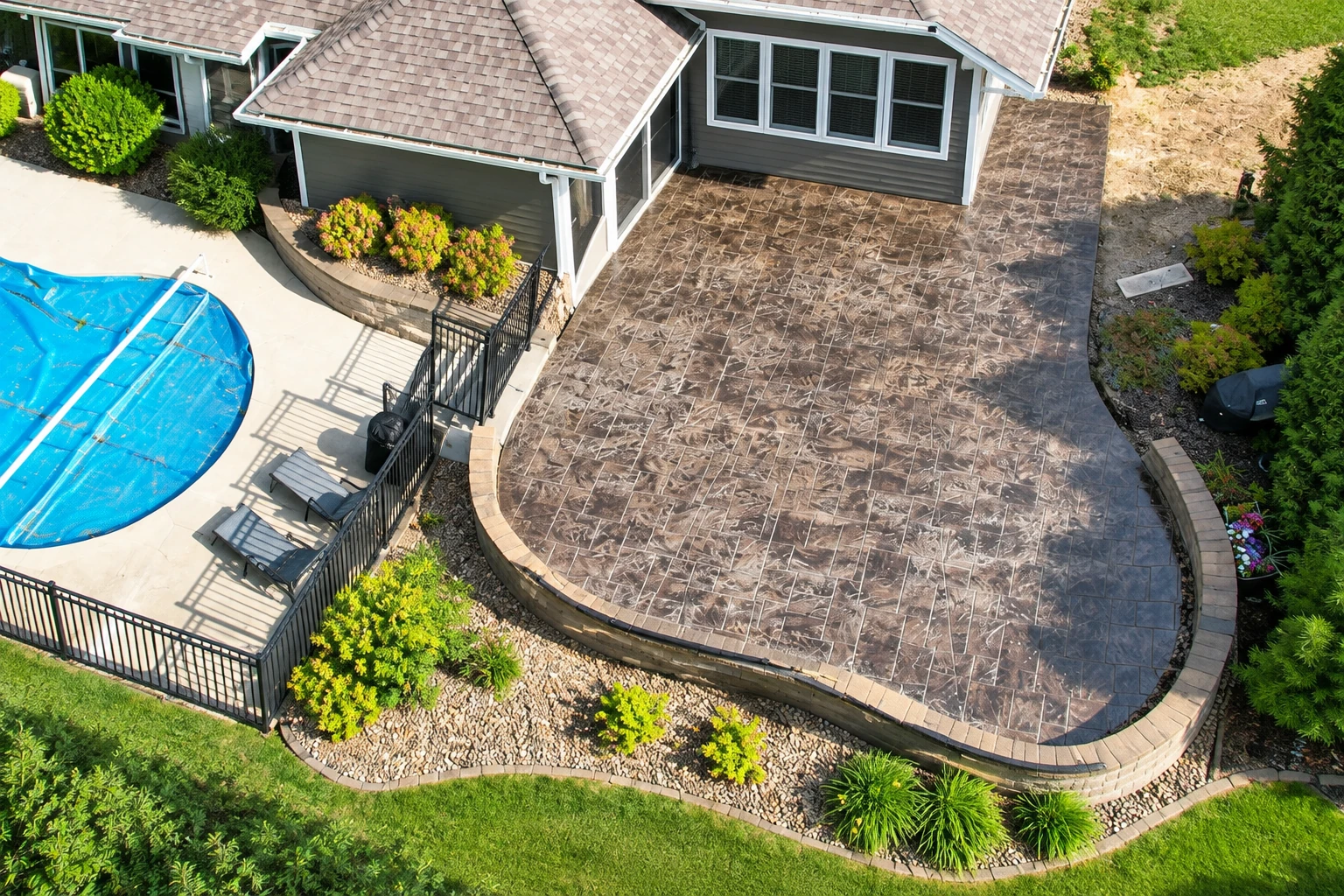
Cutting is often the first half of a bigger job. When a cracked or sunken section of driveway comes out, the dirt under it is usually why it failed, so before we start building the new driveway we dig out and pack the subgrade, the ground the slab sits on. That base is the first thing people want to trim from a budget because nobody sees it, and it's the last place I'd save money. The same care goes into cutting a clean edge where old concrete meets new during patio construction.
Most of what keeps a cut clean happens before the blade ever touches concrete.
We snap the cut lines where you approved them and confirm any utility lines have been found and shut off. If something doesn't match what we saw at the estimate, we stop and talk it over before going further.
We hook up to water and power at the site and cover nearby walls, plants and floors, because cutting throws slurry, the gray mix of water and concrete dust. Protecting things first is quicker than cleaning them after.
We run the saw the job calls for along the marked line, as deep as the concrete needs. A straight edge matters when new concrete or a door frame has to meet it later.
If removal is part of the job, we break the panels down and haul them off. Either way, we wash down the area before we leave.
Send the form or call (562) 358-3037 and tell us where the cut goes, whether it's a slab or a wall, and whether you want the pieces hauled away. We reply within one business day to set a time, then I come out, look at the spot and write up a free on-site estimate. There's no obligation to hire us.
(562) 358-3037Across the US, concrete saw cutting usually runs about $3 to $15 per linear foot. That's the general market for the sawing itself, not our price. Thicker or reinforced slabs cost more per foot than thin ones that are easy to reach, wall sawing often runs higher still, and on a small job a minimum or trip charge can matter more than the per-foot rate.
Not always, because sawing and removing concrete are separate jobs, and a cutter may leave the cut pieces right where they are. Breaking, hauling and disposal can cost more than the sawing, so ask whether any quote you get includes removal before you compare prices.
California's Contractors State License Board lists concrete sawing, breaking and coring under its D-6 Concrete-Related Services class. Before you hire anyone to cut, ask what license they carry and whether it covers this kind of work.
Plan on getting utility lines found and shut off, having water and power available, and a scan if the concrete might hold steel or lines. Common cutting contracts put finding lines in or near the concrete, getting buried lines located and shutting them off on the property owner, and they have the owner supply water and power for the saw. We go over each of these at the estimate so nothing holds up the day of the cut.
Whether a cut needs a permit depends on the job and the address. For privately owned buildings and structures, LA County Building and Safety issues building permits for construction, demolition and maintenance, working from Public Works headquarters and district offices that serve unincorporated communities. If the work reaches into the public right-of-way, the strip along the street that isn't your lot, it goes through LA County Public Works permits for encroachment and excavation instead. Which office handles a given address isn't always clear, so we help you find the right one, help with the paperwork and plan the cut around any inspections.
Dust matters most when the slab is indoors. The state's silica rule, written to protect workers, lists walk-behind saws that keep water flowing to the blade, and for indoor or enclosed cutting it also lists breathing protection for the crew, so expect a wet saw and masks if we're cutting a garage or room slab. We're based in South Whittier and work across the cities around it, including Norwalk, Whittier, Santa Fe Springs and Downey, where a lot of our calls are older driveways, patios and garage floors getting new plumbing or a fresh section. If you don't see your city listed, call and ask.
A short call about the spot, the thickness and whether the pieces stay lets me show up with the right questions already answered, so call (562) 358-3037 or send the form.
If you're still sorting out whether you need a cut, a removal or both, send us a note and I'll help you figure it out.
Tell us about your project